
Glowing Watercolor Florals
Dec 06, 2025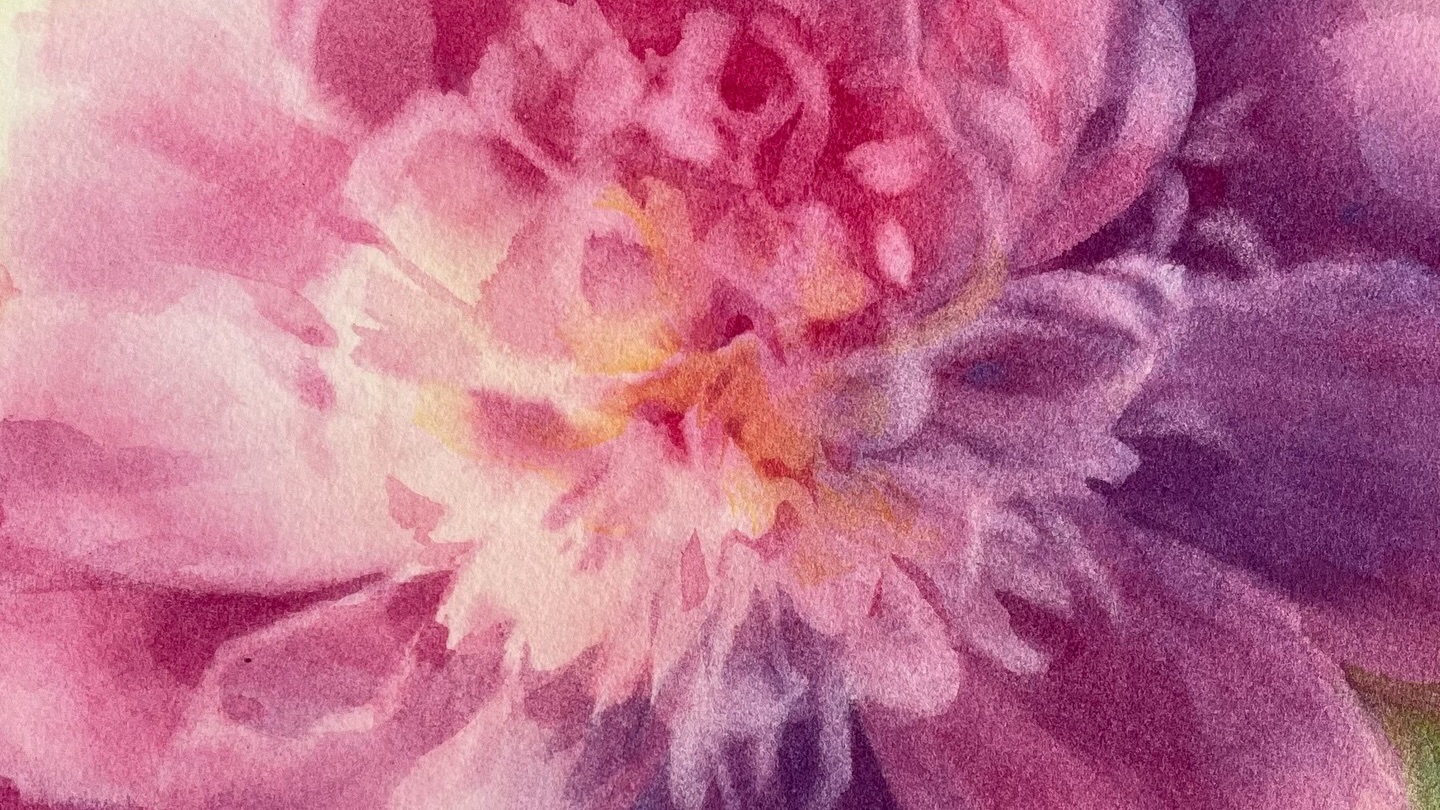
Here are some of the steps I used to paint this glowing watercolor peony.

First I started with damp paper. Instead of using tape, the paper is wet front and back and adheres to a plexiglass surface. This allows me to add paint without any hard edges for a soft atmospheric background.I use larger brushes a mix of flats and quill with natural hair or synthetic natural (basically something that hold more paint).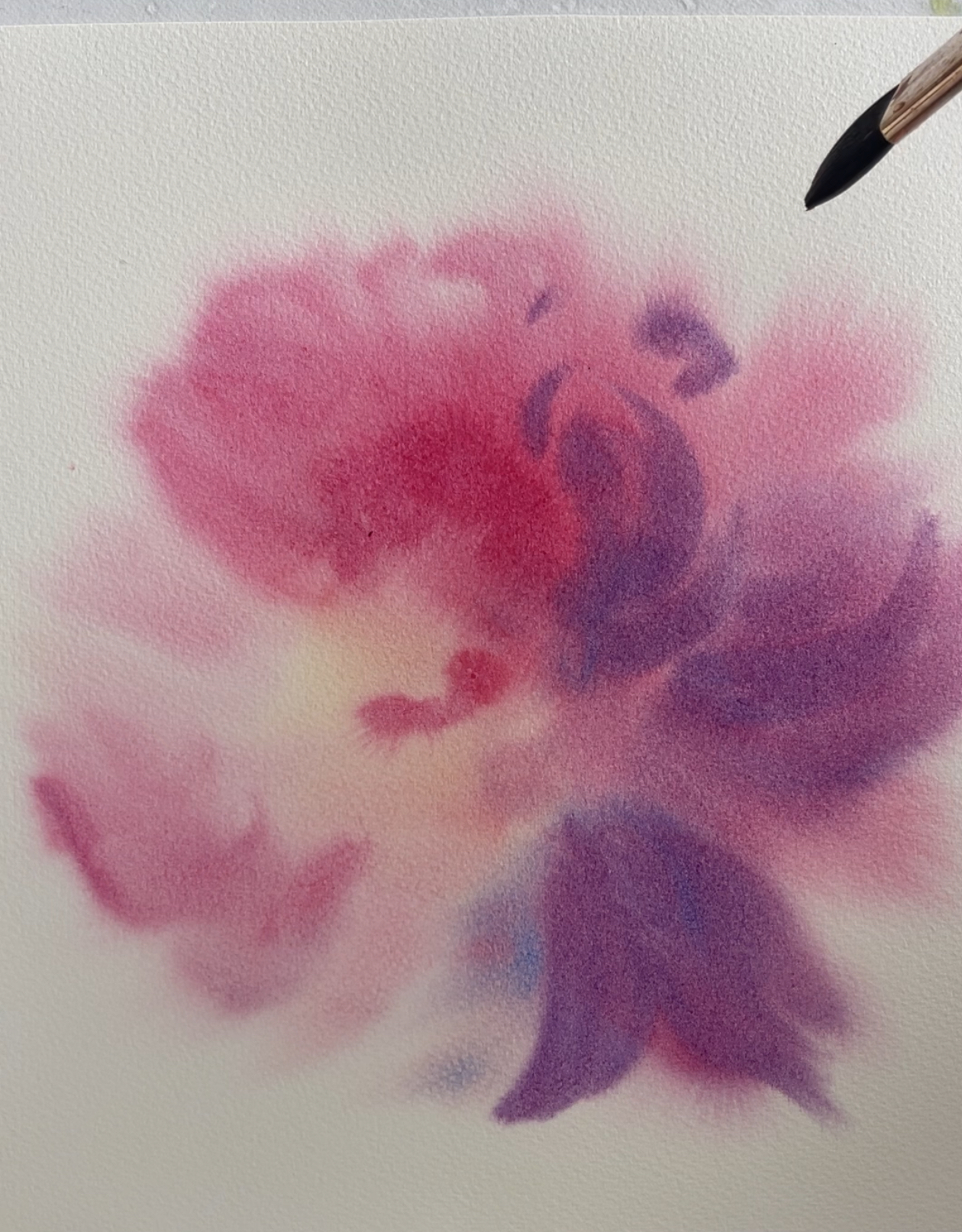
Rather than sketching my florals, I have a rough idea of my composition (lights and darks) so I just make sure to reserve the highlights at this stage. In some areas I apply very saturated paint ( very little to no water mixed in). The paint will still have a soft edge when applied. I can always 'lift out highlights' even in this stage as long as the paint is non-staining.
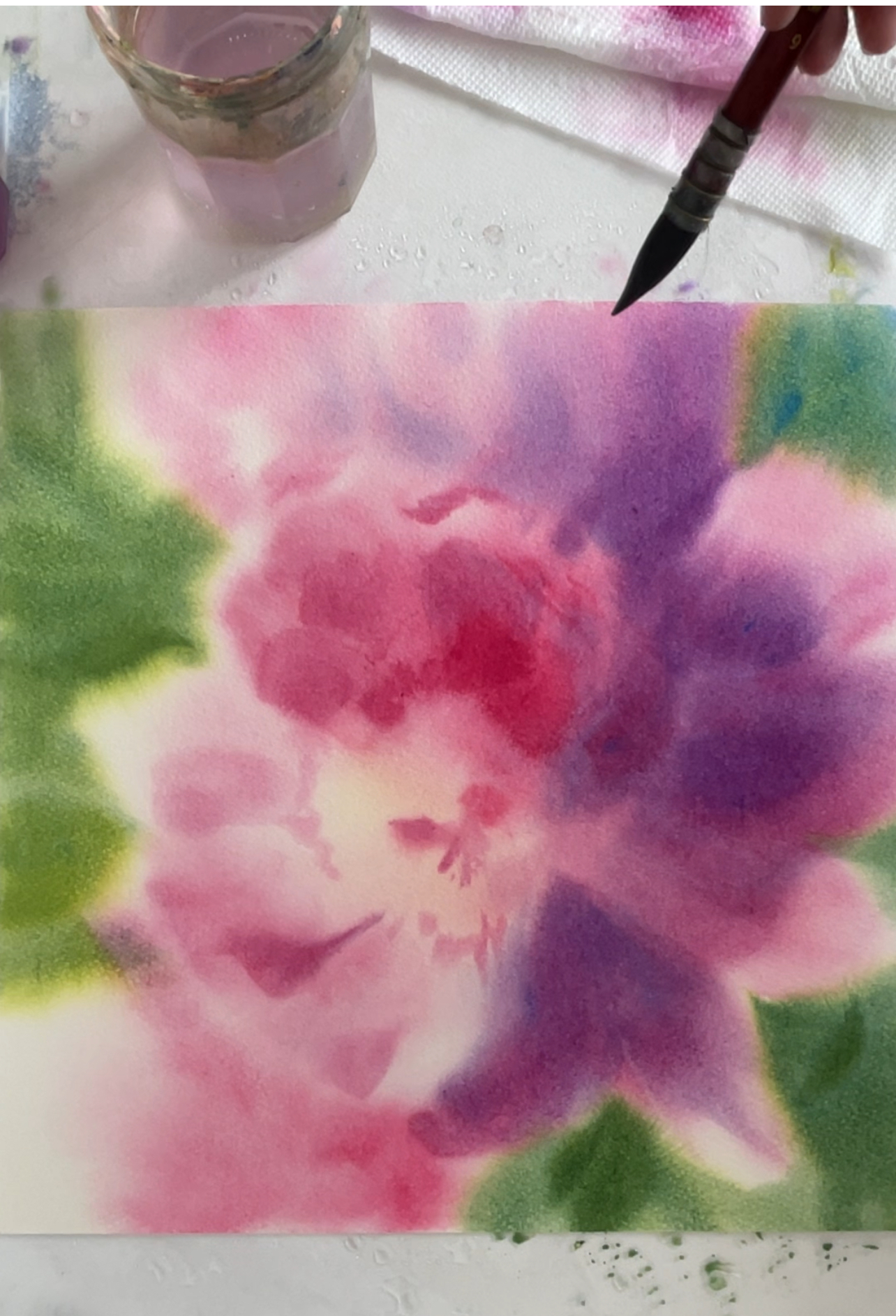
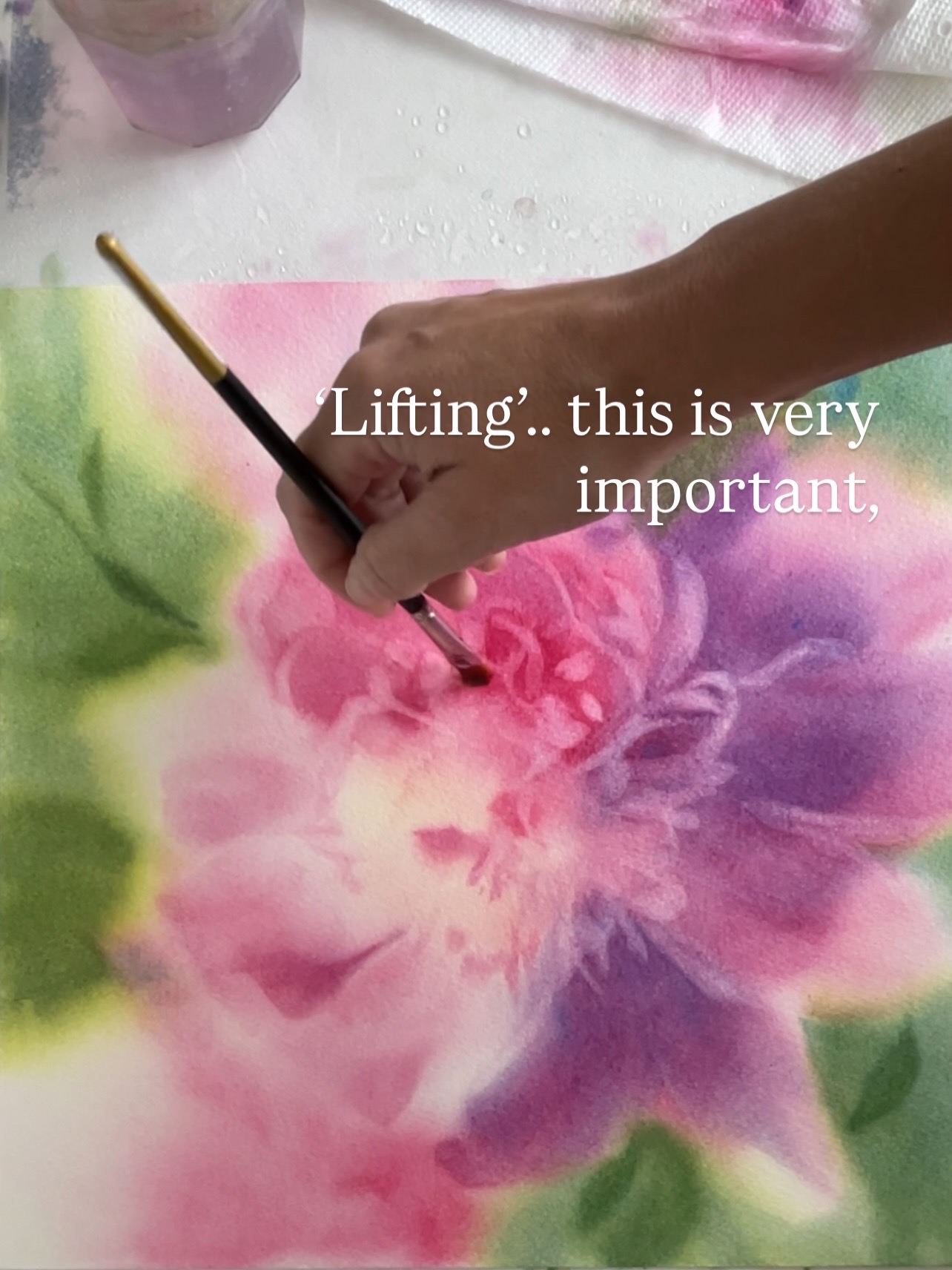
While the paper is still damp, I can begin 'lifting highlights' petals, and edges using a smaller stiffer brush. I like synthetic brushes at this stage because they are more firm and come to a sharper edge. They can lift without adding extra water to the paper. However, if I want to lift a larger area, I will use a natural brush or something that can soak up more paint/water. I'm using a variety of brushes including several Blick angled watercolor brushes and Princeton angled and flat brushes. If the edges of the painting begin to dry, I just lightly mist with a fine mist spray bottle.
The supplies I use for this style of painting include 100% cotton cold press paper, either Arches or Saunders Waterford St. Cuthbert's work very well. I use a variety of watercolor brand paint (use artist grade rather than student grade for best results). I use Holbein, M. Graham, Winsor & Newton, Sennelier, Maimeri Blu, (all can be found at Blick :-) For brushes, I have a collection of brushes including several from Princeton (Neptune series is great for synthetic brushes that act like natural brushes- they hold a lot of water and are very soft and fluid- less snap) . I use the Princeton Velvet touch synthetic brushes for lifting and applying detailed glazes of color. They are firm and have a nice sharp flat edge. The narrow pointed round is great too for those tiny shadows within the petals.
For colors, I try to use non-staining colors if I plan to lift out very light highlights, but otherwise I use what I like. For this piece I used cobalt blue, ultramarine blue, hansa yellow, quin rose, quin magenta. In the future, I plan to add more non-staining colors to my palette. At then end I very sparingly used a touch of light cad red mixed with yellow and glazed it over the center. It really helped to create a nice glowing center of the flower.

Stay connected with news and updates!
Join my mailing list to receive the latest news and updates from our team.
Don't worry, your information will not be shared.
I hate SPAM. I will never sell your information, for any reason.
